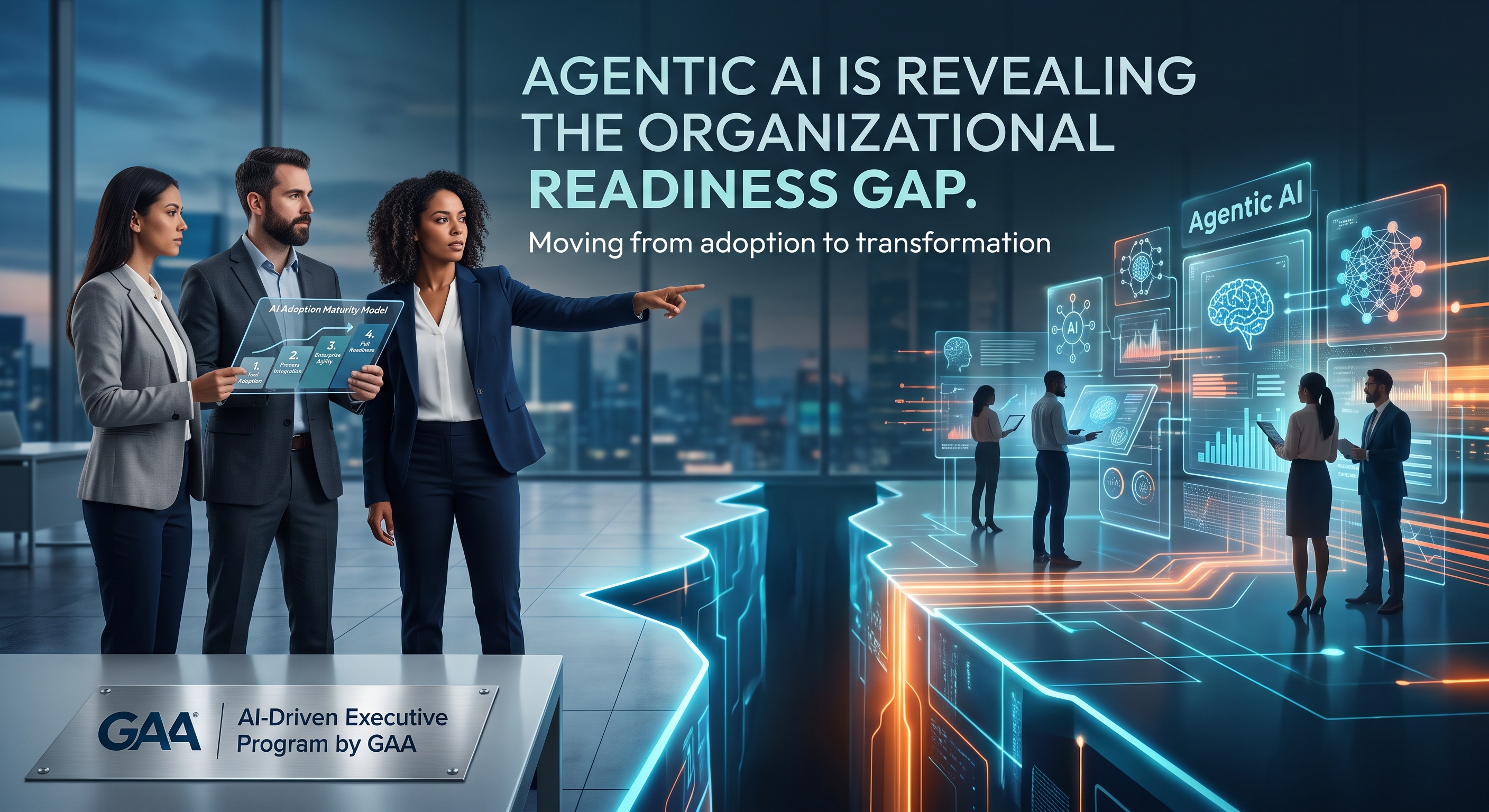

Artificial intelligence is rapidly shifting from a simple automation utility to an essential collaborative partner in project management. While generating meeting summaries or drafting routine emails provides immediate relief, these applications merely scratch the surface. Project leaders who look beyond basic task automation can leverage AI to synthesize complex data, pressure test strategic decisions, tailor communications, and extract historical insights, all while keeping human judgment firmly at the helm.
Professionals who grasp this shift, such as those advancing their capabilities through the AI-Driven Executive Program by GAA, recognize that AI does not replace leadership. Instead, it amplifies a leader's capacity to manage context, navigate stakeholder relationships, and drive ethical outcomes.
Reclaiming Time for Strategic Leadership
Time remains the most fiercely guarded resource in any initiative. Project managers frequently exhaust their hours clarifying ambiguities, chasing updates, and translating technical notes into business updates. By delegating the heavy lifting of recurring administrative tasks to AI, leaders create the operational margin necessary for actual leadership.
Instead of manually sorting through a chaotic meeting transcript, you can prompt an AI tool to categorize the discussion into clear actions and risks. You retain control over the meaning and the follow through, converting administrative hours into active stakeholder engagement.
Try this approach: "Act as an executive project assistant. Analyze the provided meeting transcript and extract the following: confirmed decisions, open inquiries, identified risks, and action items with explicitly stated owners and deadlines. Do not invent context. Flag any ambiguous points that require my direct review."
Synthesizing Complex Project Context
Modern initiatives suffer from information fragmentation. Critical assumptions, scope changes, and stakeholder feedback often live in disconnected systems. The true challenge lies in converting this scattered noise into a unified understanding of project health.
AI excels as a knowledge synthesizer. By establishing your project charter and core requirements as baseline reference documents within your AI environment, you can continuously cross-reference new meeting notes and performance data against original expectations. The tool can instantly highlight where a recent team decision drifts from the approved scope or where stakeholder expectations remain dangerously misaligned.
Try this approach: "Act as a strategy advisor. I will provide the approved project charter followed by recent performance data and meeting notes. Cross-reference these inputs and identify any developments that contradict the approved scope. Group unverified assumptions and suggest three potential corrective actions based strictly on the provided evidence."
Pressure Testing Strategic Decisions
Before a recommendation escalates to a sponsor or a working assumption becomes a permanent risk, AI can serve as an objective sounding board. A robust thought partner does not merely validate your ideas; it challenges your premises.
By prompting AI to analyze a proposed decision from multiple viewpoints, you can uncover unintended consequences and surface critical trade offs. This structured friction prepares you for difficult conversations, ensuring you have anticipated objections before walking into the boardroom. The AI provides the preparation, but you own the final call.
Try this approach: "Act as a critical sounding board. Review my proposed decision regarding the current project scope. Identify potential unintended consequences. Tell me what a highly skeptical executive sponsor would challenge. Suggest alternative approaches I may have overlooked before I finalize this direction."
Refining Stakeholder Messaging
Effective project management relies heavily on precision communication. A single project milestone might require four different messages: a high level summary for the sponsor, an operational action plan for the team, a dependency warning for external vendors, and a delicate update for a frustrated client.
AI helps shape the core facts to suit the specific audience, optimizing for tone, format, and clarity. While the technology suggests the structure, the project manager applies the necessary emotional intelligence to determine what information is too sensitive to share or requires a live conversation rather than an email.
Try this approach: "Act as a corporate communications specialist. Review my draft update below. Optimize this message for a nontechnical executive committee. Ensure the tone is objective and reassuring. Highlight the business impact and required resources prominently, and rewrite to improve clarity without losing the original intent."
Extracting Institutional Wisdom
Teams learn constantly during a project lifecycle, but those lessons are frequently lost in the rush to meet the next deadline. Historical data sits untouched in archived retrospective documents.
AI can instantly mine past project records to identify recurring bottlenecks and systemic failures. If a specific approval workflow has derailed three consecutive initiatives, AI can spot the pattern. The project manager then interprets that pattern, deciding whether the solution requires earlier stakeholder buy-in or a complete process overhaul.
Try this approach: "Act as a project management analyst. Review the provided historical retrospectives and issue logs. Identify recurring operational bottlenecks. Highlight common themes where early interventions could have prevented delays. Do not suggest changes without citing the specific historical evidence that supports your recommendation."
The Enduring Value of Human Judgment
Artificial intelligence is an unparalleled support mechanism, yet it cannot assume the responsibilities that define true project leadership. Navigating ethical dilemmas, prioritizing competing constraints, managing interpersonal conflict, and maintaining sponsor trust remain exclusively human domains.
The ultimate objective is not to surrender decision authority to an algorithm. It is to utilize technology to ask sharper questions and translate experience into superior strategy.
Navigating the Future of AI in Project Delivery
Will artificial intelligence replace project managers? No, but it is fundamentally altering the profession. While technology handles data analysis, drafting, and pattern recognition, successful delivery still demands human intuition. Leaders who embrace tools to eliminate low-value tasks will outpace those who do not, focusing their energy on navigating uncertainty and driving team performance.
Where do the risks lie? The primary danger is overreliance. Treating AI outputs as flawless or final can lead to severe missteps. Professionals must vigilantly validate data, protect proprietary company information, and screen for inherent biases. AI informs the decision process, but accountability for the outcome rests entirely on the project manager.
How can leaders build these capabilities? Mastering this balance requires deliberate skill development. The AI-Driven Executive Program by GAA provides leaders with the structured methodology required to implement these technologies responsibly. Rather than focusing on superficial prompt engineering, the program equips professionals with the strategic frameworks needed to integrate AI into enterprise environments, ensuring ethical adoption and continuous value delivery.